![]() |
PREFACE
In 1970 Mrs Romilly, then Stenographer to the Assistant Resident Commissioner, discovered some old files containing an early manuscript copy of the "The Proceedings of H.M.S. 'Royalist'". As a spare-time activity she began the task of transferring the materials to stencils. So the 'Royalist' project was born. The work later continued in the hands of Mrs. Lamb and Nei Katokarara Kiboboua.
Later in l972, Mr. Dick Turpin inherited the project. The stenciling was completed with the help of his wife, Peggy, and Gladys Bristow, and necessary corrections were made. By late 1973 the work was ready for the printer to take over.
When the Turpins returned from leave in 1974 they found the project in a shambles. Some of the already printed pages had been lost or damaged. A thorough search of the print shop turned up much of the misplaced material, but quite a bit had simply vanished. So the work of re-cutting the stencils for the missing pages had to begin. The new stencils went to the printer and the end appeared in sight at last. Then a new cloud appeared on the horizon: the print shop had run out of stocks of foolscap paper in white. It was a question of whether to go ahead and reprint on white A4 paper or accept foolscap, but in pink! The hard decision was made: it would be pink foolscap. But when the finished pages arrived from the printer they were not only pink but in the smaller format A4 as well. Just a few days before the finished work was due to go for binding, the unexpected occurred: paper almost white and almost foolscap turned up in the Colony. So, once again stencils had to be re-cut, and new printing organized. Thus the rather less than uniform appearance of the finished volume. Almost six years of stenciling and re-stenciling, printing and re-printing have gone into it. It is a minor monument to those who have persevered with the task and to the difficulties inherent is publishing such a work from Tarawa.
In 1974, The Tungavalu Society gratefully accepted Mr. Turpin's suggestion that the 'Royalist' should be published under the Society's imprint. It was a most generous offer, particularly considering the amount of work that had already been done and the frustrations that had been met. And it still wasn't over. The last batches of re-stenciling and printing and yet to be done, the big job of collating by hand some 200 copies still lying ahead. Mr. and Mrs. Turpin carried on until the job was completed, until early this year, fitting the work into their already heavy schedule.
The 'Royalist' is a major work. The papers collected here give a rare and vivid picture of the islands in the 1890's when there was little law and even less order. Captain Davis of H.M.S. 'Royalist' a ship of the Royal Navy's Australian Squadron was sent to the Gilberts to declare a British Protectorate. It was one of the last acts of what has been termed 'British Imperialism'. Davis did more than bring 'The Flag'. He settled disputes amongst traders of various nationalities then operating in the Gilberts and between traders and islanders. He ended a civil war on Tarawa. He met and talked with all manner of people. What he saw and heard he recorded, and his observations are detailed and shrewd. This publication should provide invaluable source of material for anyone engaged in a study of Gilbertese history. It is also to be hoped that it will stimulate more people in the Gilberts to take an interest in their own history.
The Tungavalu Society extends its grateful thanks to all those who had made this publication possible: to Mrs. Romilly, to Nei Katokarara, to Gladys Bristow, to the Government Printery, to the Tarawa Technical Institute (for help with the duplicating) and particularly to Mr. and Mrs. Turpin whose dedication to the project and intimate knowledge of the Gilbert Islands had made them the ideal people to bring the 'Royalist' project to fruition.
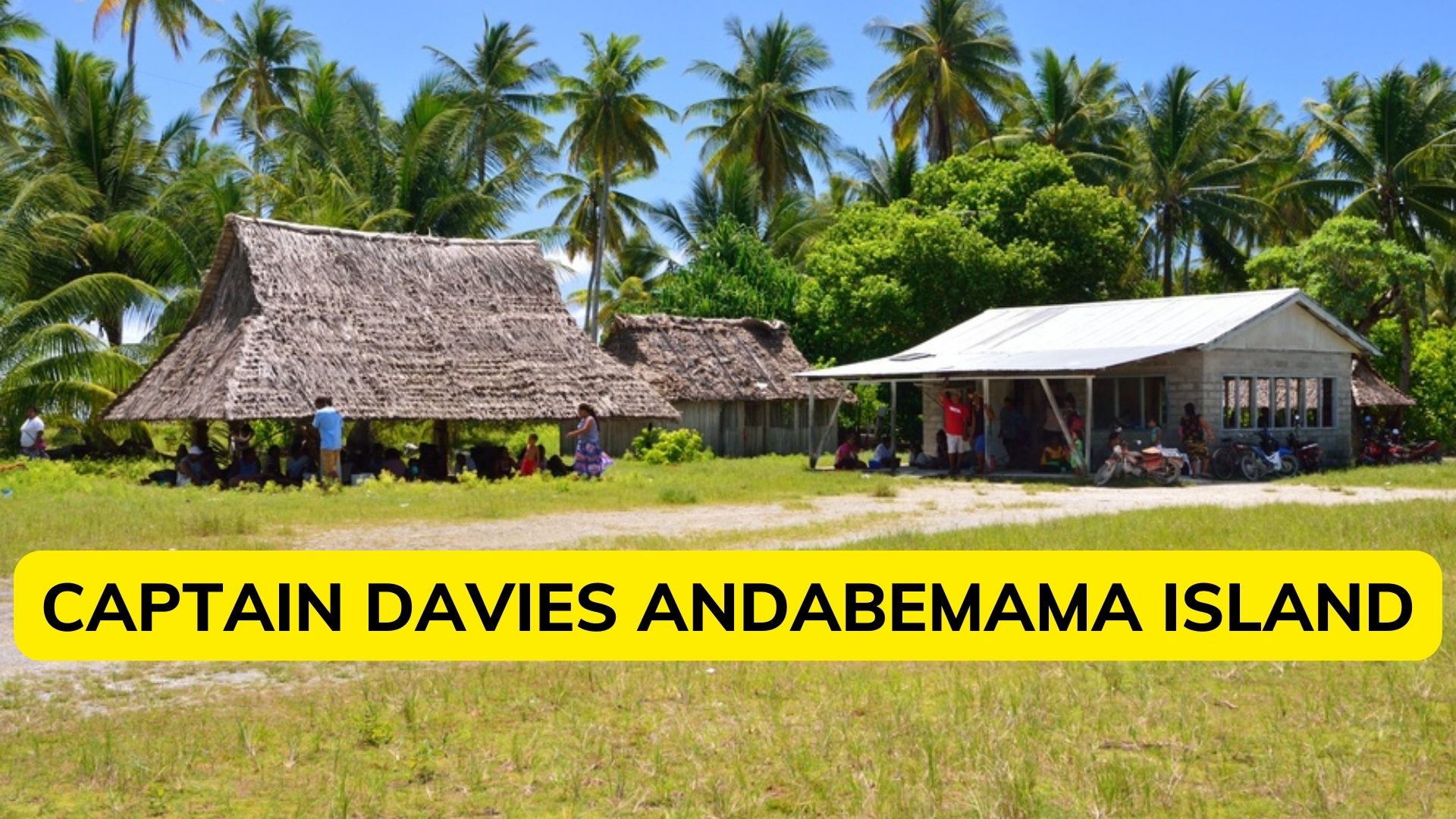
|
|
|
|
INTRODUCTION
The sixteen islands of the Gilberts, declared a Protectorate by Captain Davis, R. N. of H.M.S. 'Royalist' between 27th May and 17th June 1892 were discovered intermittently from perhaps as early as l537 up to l826. The Ellice Islands were declared a Protectorate by Captain Gibson R. N. of H.M.S. 'Curacao' between 9th and 16th October of the same year; Banaba (or Ocean Island) was included within the Protectorate in 1900. In 1916 the Protectorate became the Gilbert and Ellice Islands Colony and in the same year Fanning and Washington were included in it together with the islands of the Tokelau or Union Group; Christmas Island was included in 1919. The Tokelaus were detached in 1925; the Phoenix were added in 1937 and the five islands of the Central and Southern Line Islands in l972. The Ellice Islands were detached to become a separate colony in 1976.
The "Proceedings of H.M.S. 'Royalist'", reproduced here, described one of the closing acts of the acquisitive phase of British Imperialism in the Pacific.
The story of European rivalry in the Pacific began even before it was first sighted by Balboa in 1513 and since then Pacific History has been dominated by the European powers ascendant in Europe at any particular time. Portuguese discoveries of the offshore Atlantic islands, the rounding of Southern Africa in 1487 and Columbus's voyage to the Bahamas on behalf of Spain in 1492 caused conflict between Portugal and Spain over the possessions of new lands which the Pope tried to settle by a Bull issued in 1493 awarding all of those lands being newly discovered east of a line one hundred leagues west of the Azores to Portugal and those lands to the west to Spain. By the treaty of Tordesillas in 1494, the dividing line was moved to a line running north and south three hundred and seventy leagues west the Cape Verde Islands. The amended line awarded Brazil to Portugal, but most of the Americas and the Pacific to Spain. Portugal claimed the East Indies but Spain took the Philippines in 1564. However, as the determination of accurate longitude was impossible at this period and remained an inexact science until Captain Cook's time and the introduction of the marine chronometer disputes continue as each country tended to fix longitudes favourable to its own claims.
During the sixteenth century the history of European voyaging and discovery in the Pacific remained predominantly Spanish with the Portuguese acquiring the East Indies at the Pacific's western edge until superseded by the Dutch at the end of the century. There were a growing number of voyages, the most of which were those of Magellan in 1520 to 1522 (the first voyage around the world); Mendana's discovery of the Solomon Islands in 1576; Drake's round the world voyage in 1577 to 1580 and Mendana's second voyage in which he discovered the Marquesas and the islands of Santa Cruz.
By the beginning of the 17th century, the Dutch had taken over much of the Portuguese East Indies and thereafter continued the Portuguese policy of voyaging and discovery. It is possible that undocumented Portuguese or other voyages to part of Australia had provided the basis for some early maps of about the middle of the 16th century but the documented history of the discovery of Australia was begun in 1605 - 1606 by the Dutch although this was followed immediately by the passage of the strait between New Guinea and Australia by the Portuguese Torres. Tasman discovered Tasmania, New Zealand, Fiji and other groups between 1642 - 1643. Piecemeal and incomplete discoveries continued until the improvement in European ships and navigation in the 18th century allowed the great discoveries and charting of the Pacific of that period.
The ending of the Seven Year's War in 1763 left Britain predominant in the colonial and maritime spheres, nevertheless the French were determined to take an equal share of any European expansion in the Pacific and throughout the second part of the 18th century British and French rivalry increased. Although this period is replete with famous names of voyagers - Byron, Wallace, Cook, Bougainville, Perouse, d'Entrecasteaux - and proclamations of sovereignty on behalf of the various European powers were made by ships' commanders from time to time, no actual settlements or acquisitions were made until the British settlements in Australia at Port Jackson Sydney in 1788. By the beginning of the 19th century, the main island groups of the Pacific had been discovered and chartered by Europeans. It remained to fill in the gaps and develop trade.
Disregarding the early European conquest on the edge of the Pacific - the American coast, the East Indies and the Philippines - acquisition only began with the British in Australia in 1788, followed in New Zealand in 1840; these in turn influenced Britain in later acquisitions as the colonialists in Australia and New Zealand were anxious to monopolize Pacific Island trade for themselves and pressed Britain to acquire islands and island groups to keep out the commerce of rival European powers. European traders and missionaries of many nationalities were establishing plantation, trade and religious interests throughout the Pacific which often led to conflict which led in turn to request for help to the European countries from their nationals. Crimes committed by or against Europeans led to actions by warships of their parent countries. Attempts were made to control the recruitment of Pacific Islanders or labour and to restrict the sale of guns. These factors among others built up pressure for the acquisition and control of the various island groups by the European powers and after the American Civil War by the United States of America. The French, disappointed at being forestalled by Britain in New Zealand in l840, counted by acquiring the Society Islands and the Marquesas in 1842 and New Caledonia in 1853. Germany became very active especially in Samoa, in the groups to the north of New Guinea and in the Marshall Islands. In 1874 Britain annexed Fiji; in 1884 Germany acquired New Britain, New Ireland and the Northeast Coast of New Guinea; in the same year Britain under pressure from the Queensland colonialists declared a protectorate over southeast New Guinea. In 1893 Britain declared a protectorate over part of the Solomon Islands and acquired more of them by agreement with Germany in 1900. After a war with Spain in 1898 the USA acquired Guam and the Philippines and after troubled in the Republic of Hawaii the USA annexed Hawaii also. In 1899 the remaining Spanish possessions in the Pacific - the Caroline, Palau and the Mariana Islands - were sold to Germany which also annexed Western Samoa the same year leaving the USA to take over the Eastern Samoan Islands.
After the annexation of Fiji in 1874 Britain was still faced by the problem of the control of British subjects in the other island groups of the Pacific. To accomplish this, the Western Pacific Order in Council was enacted in 1877. This applied to all islands in the Western Pacific not within the jurisdiction of any civilized power and created the officers of High Commissioner for the Western Pacific, Chief Judicial Commissioner and Deputy Commissioners. It established the High Commissioner's Court. The Governor of Fiji was appointed High Commissioner; the Chief Justice of Fiji was appointed the Chief Judicial Commissioner and various persons, in the early years mainly officers of the Royal Navy, were appointed Deputy Commissioners. This attempt to control British subjects was not very successful and left unsolved the problem of the control of non-British subjects for their punishment for crime against British subjects.
In 1886 the British and German Governments agreed to a division of the Western Pacific into two spheres of influence - the Marshall Islands and Nauru came within the German's sphere - the Gilberts, Ocean Island and the Ellice within the British. Germany immediately took over the Marshall Islands but Britain took no action in the Gilberts which had by this time become an area of intense rivalry between German, American and some Australian based trading interests.
In 1890 the British High Commissioner for the Western Pacific based in Fiji recommended the acquisition of the Gilberts by Britain, not only to forestall possible action by Germany which in 1891 itself urge Britain to declare a Protectorate to forestall the USA, but also to control the recruitment of labour, the sale of guns and liquor and to end the growing turbulence within the group. In 1892 the British Government, realizing by now that failure to declare a Protectorate would probably lead to acquisition by Germany, despite the 1886 agreement, or by America which was not a party to the agreement, ordered the Commander-in-Chief, H. M. Ships, Australia, to send a warship to the Gilberts to declare a Protectorate. Captain Davis, R. N. of H.M.S. 'Royalist' was sent to carry out this task.
In accordance with his instructions, Captain Davis talked with the old men of each island to obtain their agreement to the declaration of the protectorate and to explain what it would mean. After talks with the old men, he declared the Protectorate on all islands except on Aranuka and Kuria which were included with Abemama and on Makin which was included with Butaritari.
Captain Davis had been ordered to visit the Ellice Islands but not to declare a Protectorate there. He reported that the 'Kings' of each island had asked for a Protectorate to be declared and Captain Gibson R. N. of H.M.S. 'Curacao' was thereupon ordered to the Ellice Islands on each of which he declared a Protectorate between the 9th and the 16th October.
![]()
![]()
![]()
![]()
![]()
Andrew Sharp and H.E. Maude have each researched the History of the Discovery of the Islands of the Gilbert Group; while their researchers have led each of them to the same conclusions about the discovery of five of the Islands, they did not agree about all of them and their separate conclusions are therefore set out below:- 1537 Sharp considers that the crew of Hernando de Grijalva's vessel 'San Juan' probably discovered Marakei and Abaiang or alternatively either Butaritari, Marakei, Abaiang or Tarawa.
1606 According to Sharp, Pedro Fernandez de Quiros in the vessel 'San Pablo' discovered 'Makin' whereas Maude believes he sighted Butaritari. 1765 Commodore John Byron R.N. of H.M.Ships 'Dolphin' and 'Tamar' discovered either Tabiteuea or Beru or Nikunau according to Sharp, whereas Maude considers that he certainly discovered Nikunau. 1788 Both Sharp and Maude agree that Captains Gilbert and Marshall of the British vessels 'Charlotte' and 'Scarborough' discovered Aranuka, Kuria, Tarawa, Abaiang and Butaritari. However Sharp considers they also discovered Abemama and Maiana although Maude believes that they saw neither of these two islands. Sharp adds the reservation that Grijalva in 1537 may have been the first discoverer of either Abaiang or Tarawa or Butaritari, and Maude reserves the discovery of Butaritari to Quiros in 1606. 1799 Once again both Sharp and Maude agree that Captain Bishop of the British vessel 'Nautilus' discovered Nonouti, although Maude notes that it may have been first discovered by Grijalva in 1537; however whereas Maude awards the discovery of Tabiteuea to Captain Bishop, Sharp reserves the possibility of its discovery to Commodore Byron in 176M5; Maude also considers that Bishop discovered Abemama 1804 Captain James Cary of the American whaling vessel 'Rose' discovered Tamana according to both Sharp and Maude. 1809 Both Sharp and Maude award the discovery of Arorae to Captain Patterson of the British vessel 'Elizabeth'; Maude concludes concludes also that he discovered Maiana. 1824 While Sharp grants the rediscovery of Marakei, possibly first sighted by 1. Sharp: 'The Discovery of the Pacific Islands' by Andrew Sharp, Oxford University Press, 1960. 2. Maude: 'Spanish Discoveries in the Central Pacific'; 'Post-Spanish Discoveries in the Central
1826 Sharp and Maude agree that Captain Clerk of the British whaling vessel 'John Palmer' discovered Onotoa; Maude adds that Onotoa was sighted the same year by Captain Chase of the American vessel 'Japan'. Maude considers that Captain Clerk discovered Beru but while Sharp agrees that he sighted Beru and Nikunau, he considers one or other of them had been discovered by Byron in 1765. |
|
|
|
|
| MAKIN:
1606
Quiros (Sharp) BUTARITARI: 1537 Grijalva (Sharp) - doubtful 1606 Quiros (Maude) 1788 Gilbert and Marshall (Sharp and Maude) MARAKEI: 1537 Grijalva (Sharp) 1824 Duperrey (Maude) ABAIANG: 1537 Grijalva (Sharp) 1788 Gilbert and Marshall (Sharp and Maude) TARAWA: 1537 Grijalva (Sharp) - doubtful 1788 Gilbert and Marshall (Sharp and Maude) MAIANA: 1788 Gilbert and Marshall (Sharp) 1804 Patterson (Maude) KURIA 1788 Gilbert and Marshall (Sharp and Maude) ARANUKA 1788 Gilbert and Marshall (Sharp and Maude) |
ABEMAMA
1788 Gilbert and Marshall (Sharp) 1799 Bishop (Maude) NONOUTI 1537 Grijalva (Maude) 1799 Bishop (Sharp and Maude) TABITEUEA 1765 Byron (Sharp) 1799 Bishop (Maude) ONOTOA 1826 Clark (Sharp and Maude) 1826 Chase (Maude) BERU 1765 Byron (Sharp) - doubtful 1826 Clark (Sharp and Maude) NIKUNAU 1765 Byron (Maude); (Sharp) - doubtful 1826 Clark (Sharp) TAMANA 1804 Cary (Sharp and Maude) ARORAE 1809 Patterson (Sharp and Maude) |
|
|
|
|
B. Letter of proceedings No, 32 of 16th August, 1892, Captain Davis, R,N., H,M.S, "Royalist" to Commander-in-Chief
C. Enclosure 1: Letter of 23rd June, 1892, Captain Davis, R,N. to Captain Brandeis, German Imperial Commissioner, Jaluit, Marshall Islands.Enclosures 2 & 3: Correspondence between Captain Davis, R.N., and the German
Imperial Commissioner; Jaluit, about a claim against a German vessel by a party of natives from Arorai.Enclosure 3B:Not available,
Enclosures 4 & 5A: Correspondence between Captain Davis, R.N., and the German Imperial Commissioner, Jaluit, about Captain Davis's cruise in the Marshall Islands.Enclosures 5B,C,D: Correspondence between Cnptain Davis, R.N., and the German Imperial Commissioner, Jaluit, about the return of a party of natives from Mille to Butaritari.
Enclosures 6 & 7: Letter of 25th June and telegram of 27th June from Captain Davis,R.N. to Commander-in-Chief reporting the declaration of a Protectorate over the Gilbert Group; bunkering; and the recruitiug of labour by the Nicaraguan steamer "Montserrat".
Enclosures 8 & 9: Correspondence between Captain Davis R.N, and some expatriate residents of Butaritari.
Enclosure 10: Menorandum about the sale of copra to local traders: Butaritari and Maraki.
Enclosure 11: List of arms received in the Gilbert Islands.
2. A. Covering letter of l5th Septenber, 1892, from Commander-in-Chief, H.M. Ships, Australia, to the High Commissioner for the Western Pacific.
2. B. Letter of Proceedings No. 36 of 9th August, 1892,
Captain Davis, R.N., H.M.S. "Royalist" to Commander-in-Chief.
C.Schedule of Enclosures.
Enclosure 1: Proclamation.
Enclosure 2: Notice relating to the sale of liquor and arms.
Enclosure 3: Tabular report on the Gilbert Islands.
Enclosure 4: Remarks on Diseases of the Gilbert Islands.
Enclosure 5: Tabular Report on the Ellice Islands.
Enclosure 6: Remarks on Diseases of the Ellice Islands.
Enclosure 7: Summary of expatriates: Gilbert Islands.
Enclosure 8: Summary of expatriates Ellice Islands.
Enclosure 9: Copra esports: 1891: Gilbert Islands.
Enclosure 10: Petition fron Butaritari expatriates and sub-enclosures.
Enclosure 11 Marshall Group: Statistics
3. Information gathered by H.M.S. "Royalists" on the Ellice Islands.
|
|
|
|
PART 2
4. A. Covering letter of l5th September, 1892, from Commander-in-Chief,. H.M. Ships, Australia, to the High Commisssioner for the Western Pacific.
B. Letter No.37 of 8th September, 1892, Captain Davis, R.N., H,M,S, "Royalist" to Commmander-in-Chief.
C. Appendices: Diseases, Climate, etc. of the Gilbert Islands.Summary of expatriates in the Gilbert Islands
Copra exports: 1891: Gilbert Islands
Diseases, Climate, etc. of the Ellice IslandsSummary of expatriates in the Marshall Islands
Receipts and Expenditure: 1891: Marshall Islands
Taxation: Marshall Islands
Schedule of Enclosures to Islands Reports
D. Island Reports:
Butaritari:
Makin:
Maraki:
Receipts
Apiang:Tarawa:
Maiana:
Nonuti: (Report and enclosures not available)
Aranuka:
Kuria:
Taputewea:
Onotoa:
Nukunau
Peru:
Articles of Agreement to ship in the "Poe" of Raratonga
Tamana:
Arorai:
|
|
|
|
The spellings of the names of the Gilbert Islands given throughout this book are those Used by Captain Davis. They sometimes differ from the spellings in modern use. For convenience, Davis' spellings are given below with their modern equivalents. Davis's Spellings Modern Spellings: Butaritari Butaritari(often given as Makin on American charts). Makin Makin (often given as Little Makin on American charts when Butaritari is named Makin. Makin Meang - North Makin - was the name used by Grimble). Maraki Marakei Apiang Abaiang (the "p" and "b" sounds are generally indistiguishable in Gilbertese: "b" is more normally the letter now used for this sound). Tarawa Tarawa Maiana Maiana Nonuti Nonouti (the modern "ou" representing the sounds intermediate between "o" and "u"; or, more accurately, the combination of both) Apamama Abemama (See note on Apiang). Aranuka Aranuka Kuria Kuria Taputewea Tabiteuea (See note on Apiang; the name is thought to be a corruption, of "tabu-te-uea" - "Kings are forbidden"). Onotoa Onotoa Nukunau Nikunau (the "i" spelling has only fairly recently become the normal one. The "u" spelling was still used in official documents in the 1930's and is occasionally seen today). Beru (See Note on Apiang). Tamana Tamana Arorai Arorae (the modern "ae" represents a rather flatter sound than is suggested by "ai"). Most of the islands of the Gilberts also had 'European' names bestowed by the early explorers; there are often several such names for each island. These were generally obsolete by the late nineteenth century, the indigenous ones having become established. But the overall name of the group - Gilbert Islands - has remained in use to the present times, though most Gilbertese people are aware of the traditional name, Tungaru. The Ellice Islands, now separate from the Gilberts, have recently reverted to their traditional name: Tuvalu. And some of Davis' spelling of island names are now obsolete. "Oaitupu" is "Vaitupu"; "Nanomea" is "Nanumea"; "Nanomana" is "Nanumaga"; and "Narakita" is "Niulakita". (N.B. Some modern sources - mainly American - used the term "kingsmill" group for the Gilbert Islands. This name is now obsolete and has no meaning to most Gilbertese people who think of their island as the Gilberts - Kiribati in Gilbertese - or, less frequently nowadays, Tungaru). |
|
|
|
PROCEEDINGS
Since my letter of Proceedings dated 11th May at Suva, Fiji, I have the honour to report that H.M.S. "Curacoa" arrived at Suva at 4.30 p.m. that day.
2. I completed with coal from the hulk "MIKADO", taking in addition about 30 tons on deck in bags. This coal is of an inferior description, similar to that received by this ship in November last, - no other coal being procurable, I had no choice but to take it. I discharged two men to Hospital suffering from fever and ague, thinking it unwise to take them to the islands.
3. On the 13th I weighed and proceeded under steam at 11 a.m.
At 8.30 p.m. on the 14th I stopped the engines, and proceeded under sail only, with a light E.S.Ely. wind.
On 16th at 9.a.m., sighted FOTUNA Island.
On the 17th at 6.45 a.m. proceeded under steam and at noon on the 18th when off NURULAILAI Island, Ellice Group, communicated with natives in canoes.
A current off about 6 - 10 miles a day setting to the N.Wd. was experienced to the Ellice Group on the 19th at 1 p.m. I stopped off OAITUPU Island. Mr. NITZ a German trader came on board - he had no news. Since noon, the preceding day, experienced a set to S.Wd. of 20 miles.
At 2.15 p.m. proceeded. At 6 p.m. stopped engines and proceeded under sail. No appreciable current experienced on 20th. On 21st current setting to S.Wd. half mile an hour, and on 22nd due west one mile an hour, and on 23rd N 85 degree W 20 miles in 24 hours.
On that day at 7.20 p.m. proceeded under steam, and on the morning of the 24th sighted TAPUTEWEA Island, Gilbert Group, and at 9 a.m. stopped and anchored at north end of the island in five fathoms, the current experience being W by N, 18 miles in 20 hours. Dressed ship in honour of the anniversary of Her Majesty's birthday, and at noon fired a royal salute. Having communicated with several traders on the island, at 8 p.m. I weighed and proceeded for APAMAMA, stopping off ENTRANCE Island at 1 p.m. on the 25th experiencing a set of 1 mile an hour to W.N.W.
Having communicated with "Jack" the Pilot who is in charge of that island, I sent a letter by him to the King, intimating my intentions of hoisting the Flag on APAMAMA Island on the 27th idem.
4. I proceeded at 5 p.m. for MAIANA island. When I arrived and anchored in l0 fms. At l0 a.m. on the 26th experiencing the same current as on the previous day.
The anchorage off N.W. end of MAIANA is a good one, the banks gradually shoaling.
5. MR. CORRIE, an English trader on the Island, who has often given his services
to H.M. Ship as interpreter and who was recommended to me by the High Commissioner as being by far the best and most trustworthy interpreter in the Group had just left his station on business but seeing a vessel approach the Island, he returned. In reply to my request for his services, he said he would be most happy to come if I could make it a little later, as he had some business which required his presence just then - but being aware that I could get no other reliable man, I pointed out to him the importance of the mission I was engaged on. He managed to come and I left MAIANA the same night anchoring off ENTRANCE Island. I departed APAMAMA the following day at 9 a.m.
At noon that day, I proceeded in boats with a party of seamen and marines for the King's village which is six or seven miles across the lagoon from ENTRANCE Island and not visible from the ship. Having ascertained from Mr. Corrie, and other traders on Islands with which I had communicated, that they were unaware that any foreign power laid claim to the Gilbert Group, I, in compliance with your secret memo of April 22nd 1892, explained my mission to the King and his councils in the maneaba or meeting house in the presence of some 300 or 400 natives and having read the proclamation declaring a British Protectorate over the Gilbert Group from that date, I hoisted the Union Jack on the the King's flagstaff with the customary honours.
The vessel being scarcely visible from the village, I proposed to the King that the flag should be left in charge of the pilot on ENTRANCE Island, and hoisted on the approach of any vessel there on his flagstaff there - to which he agreed. I handed the Proclamation to the King, to be kept in his charge and in the missionary's care, I left a notice for the information of traders, concerning the prohibition of the sale of arms etc. and supplying of intoxicating liquors to natives ( copies of both Proclamation and Notice are attached to my letter No. 36 of 9th August, containing the special report of the establishment of the Protectorate over the Gilbert Group and my Island report.)
The best anchorage at APAMAMA I found to be in 8 fms. just clear of the tide rips with:- Center of Sand Island bearing N 67 degrees E.
North Point Entrance Island N 82 degrees E.
South Point Entrance Island S 67 degrees E.
On my return to the ship I hoisted the Union Jack on the staff at ENTRANCE Island. H.M.S. Royalist saluted it with 21 guns, I left the flag in charge of "Jack" the Pilot.
That peculiar constitution of the Gilbert Group consisting of sixteen islandsor clusters of islands, with no less than 13 different governments, necessitated in my opinion a repetition in the other 12 islands of the ceremony performed at APAMAMA.
8. I proceeded at 7 p.m. for NONUTI Island and arrived there the following afternoon. I was unable to find a good passage over the reef, it being low water, so, to avoid delay, I proceeded for TAPUTEWEA, intending to take NONUTI on my return north. I weighed and proceeded at 2 p.m. arriving the same evening and brought up in 9 fms, off the north end of the Island at 7 p.m. The current about this part of the Group runs to the W.N.W. about one knot an hour.
The following morning, May 29th I shifted berth to the Southward, anchoring in 5 1/2 fms. with the following bearings. Point of Island N 26 degrees N Church at UTIROA N 83 degrees ESandbank S 60 degrees E
At 3 p.m. I landed a party of seamen and marines and after talking to the "old men" in the maneaba hoisted the flag, leaving it and a copy of the Proclamation, and Notice concerning arms and intoxicating liquors at this island - as I did at all other islands visited.
After the flag was hoisted, the "Old Men" proposed that they should give up their arms now that the Queen was going to p;rotect them, as they said the possession of them always led to fighting, which had but just finished at the South end of the Island. The suggested that I should take them, to which I agreed - and told them I should be glad to receive them on my return to the Island.
9. A trader on the Island KUM-ON (Chinese) a British subject, made a complaint that a native TEU-TOO had robbed him. I made enquiries into this matter, and decided to finish it up on my return. (This matter forms subject of "Royalist" letter No. 18 of 1892).
KUM-on also complained that the natives tabooed him fishing. Having ascertaining that he used dynamite on their fishing ground I ordered him to do so no more, but told the natives they were not to prevent his fishing there in the ordinary way.
10. I was informed by ALFRED HICKING trader, that on the 10th Feby. 1887 FRED THOMAS and JAMES GARSTANG, traders and British subjects went on board to FIJI SCHOONER "MIDGE" anchored in the lagoon. After leaving her at night, they were never heard of again, and are supposed to have been drowned. Those men left no effects of any value - but some months afterwards CHARLES KOMAKOLOI, a Honolulu native, who was occupying THOMAS old house found $83 buried in the building, supposing this money to have belonged to THOMAS he handed it to me on my arrival, I have transferred it to the High Commissioner at Fiji, to be placed to the credit of FRED THOMAS' estate.
11. I left TAPUTEWEA at 8.30 p.m. on 29th May, and arrived off ONOTOA Id. at 11 a.m. the next day - the current experienced during the passage of 11 1/2 hours being S 30 degrees W 12 miles. I anchored in 6 fms. off the NW end of the Island - a very good anchorage. At 3 p.m. I landed a guard and hoisted the Flag, after interviewing the people in the Maneaba. The party having returned on board, I left the same evening for TAMANA arriving off that Island at 8 a.m. next day - the current having been almost due West about. 3/4 of a mile an hour. I kept the ship under weigh there being no good anchorage off the Island, and landing met the "Old Men" in the Maneaba. They were very pleased to have the Flag hoisted there.
Finding that by the laws of this Island, both men and women were flogged, in
addition to being fined, for being found guilty of adultery and illicit connection, I asked the "Old Men" to have a meeting and see if they could not dispense with the flogging in these cases as far as women were concerned. They held their meeting, and told me that in future, no more women should be flogged in the Island. (Some ARORAI natives, who had been landed here by the German barque "JOHN WESLEY" in November 1891, being unable to reach their own Island asked me to give them a passage - I consented to this, and received thirty-five of them on board. (This case is reported in Island Report ARORAI).
At 4.20 p.m. I proceeded for ARORAI, arriving off that Island at 4.20 a.m. - having experienced a most unaccountable current of 1 knot an hour to the east. during the passage. I anchored off the SW side of the island with the stream anchor in 17 fms. - but dragging off - I kept the ship under weigh. At
I landed and hoisted the flag. I landed the natives brought from TAMANA - they were most thankful for the passage.
A complaint was made to me that a married woman had been taken away from the Island as labour by the Fiji schooner "EASTWARD - HO" in February last against her husband's wish. He being blind, was refused. (vide Royalist's letter No. 17 of 1892). I have communicated with the High Commissioner on this subject.
One of the Samoan missionaries was very ill with fish poisoning, and our visit was most opportune, as it was unlikely he could have lived much longer without medical assistance.
The natives here proposed to call the south village "Royalist" instead of "California", the name it is known by now. As most of the natives brought from TAMANA lived there and they were pleased with their treatments on board.
Many native-built wild boats are used here - they are carvel-built, with the planks sewn together with twine - and caulked with pandanus leaves. They are rather crank but carry a great deal more than the canoe.
At 3.30 p.m. I proceeded for NUKUNAU Island - and at 5 p.m. put the ship under sail. At 4 a.m. on 2nd June, I hove to off the island, and at day break proceeding - stopping and anchoring off the SW end in 12 fms. at 8 a.m. Current one knot an hour to the westward.
At l0.30 I landed and hoisted the flag, after a meeting in the maneaba. Many natives had been to Tahiti from this island as labour and whilst there became Roman Catholics. No missionary of that persuasion is stationed on NUKUNAU - but the priest of the mission visit the island occasionally. There are 158 Roman Catholics out of a population of 1779.
At 1.30 p.m. I proceeded for PERU Island and anchored off the SW end at 7 o'clock the same evening in 10 fms. - rather close to the shore, but a good anchorage with an offshore wind.
The current between NUKUNAU and PERU was running to the SWd. At over 2 knots an hour. At 7 a.m. on 3rd June, I shifted berth to ESPIEGLE anchorage, where I anchored in 7 fms. This is a bad place for landing in ship's boats. In most of the islands after half tide, it is necessary to wade on shore over the reef - in some cases as much as a mile - but here the reef extends a great dista0nce with the deep water between it and the shore.
I landed during the forenoon, and hoisted the flag at the village of TABOIAK. This village was far from clean in comparison to many visited. I was told that a schooner flying a Rarotonga Flag, had shipped three natives as crew at this island in February last - engaging them for three or four months. It was certain by some that these men were taken against their will. Mr. ECKERSTROM, a trader on the island, handed me a paper purporting to be an agreement to ship for four months at $15 a month in the "POE" of Rarotonga - the master engaging himself to return these men to their islands. This document has three native names attached as signatures - the master's name does not appear, neither the name of any witness to this agreement. (This matter is referred to in the Island Report under "Peru").
There are two small fresh water lakes on this Island, with very good fish in them. The fish belong to the "Old Men", but the natives are allowed to fish in them once a year.
I left PERU Island at 4.15 p.m., and dropping a target carried out practice with the 6" BL
Guns. At 6 p.m. I proceeded for NONUTI Island, where I arrived at 10 a.m. on 4th June - the current between these Islands running to the NWd. About 1/2 knot an hour.
I anchored off the SW end of the Island, near the beat passage, in 15 fms., rather close to the reef. At 10.15 I landed and hoisted the Flag at the maneaba at METTUNG. The natives here had a large flagstaff and a Red Ensign flying, which someone had given them.
There is not the same law and order prevailing in this Island, as in some I visitged. I was asked by the "Old Men" to take the guns away. I said, if they wished me to receive their guns, I would.
They had a consultation, and said they couldn't be answerable for those who lived at ROTUMAH at the North end, as they were a bad lot - but that at METTUNG and to the Southward they would give their guns up with pleasure, now that the Queen was going to protect them - and they promised to collect them for me by my return.
Finding several cases required investigation, I remained on shore for the night - the distance to the ship being 24 miles by Ship passage.
I found JAMES GLEESON, a British subject, trader, had been trafficking in spirits - and the following day, I tried him summarily by a High Commissioner's Court and convicting him fined him 10 pounds (Royalist letter No. 16 of 1892). This money I have handed to the High Commissioner.
Having heard in the Group, rumours that the Fiji Labour Schooner "EASTWARD-HO" had been attacked by natives of NONUTI Id. I made enquiries into the matter. (This forms subject of Royalist letter No. 17 1892).
The natives in ?? belonged mostly to ROTUMAH, the place before referred to as where I held the High Commissioner's Court. Whilst there, I assembled all the natives I could and told them that now the Flag was hoisted they would require no fire arms and I hoped on my return I should find them all collected, as they had promised to do so at METTUNG. They said they would give them all up.
NONUTI is the Headquarters of the Roman Catholic Mission in this group. The Mission originated by natives going as labour to Tahiti, embracing the Roman Catholic faith. On their return to their Island, they petitioned the Bishop to send them a Missionary - and in 1888 Peres BONTEMPS, JOSEPH AND GAILLARD, with two Brothers of the "Order of the Sacred Heart" were landed in the Group by the French man of war "LA FAVORITE". I visited their Mission station and here BONTEMPS told me how very glad they were to see the British Flag hoisted - under it all Missions were treated alike as they should be, all tending to one end - viz - "to benefit the natives".
I found Mr. LOWTHER, a British subject, and a very old trader in the Group, had had a stroke of paralysis, which had left him dumb. He is now considerably over 80 years of age, and being almost a pauper, I was glad to be able to relieve his immediate wants. Before leaving the Group I arranged that he should be cared for by Mr. MAX BRECHTEFELDE, a German trader to whom he is indebted some $300. Mr. Brechtefelde kindly offered to look after Mr. LOWTHER whose recovery, I think, is improbable. (See Island Report - NONUTI).
I left NONUTI at 5 p.m. on the 5th June and proceeded for ARANUKA, arriving off that Island the following morning. This Island is a dependency of APAMAMA, and although not necessary to hoist the Flag there I thought it advisable to land. A heavy surf was running, and no canoes coming off - I decided not to waste time, and proceeded for KURIA Island where I anchored in 10 fms., on the West side, between the two Islands. The current experienced from NONUTI was running about 1 knot an hour to the NNW. I landed nd made a few enquiries from the inhabitants, who are a particularly fine race. Everything here - as at ARANUKA - belongs to the King of APAMAMA. KURIA, although a small Island is very productive in copra. A few turtle may be procured here.
At 3 p.m. I left KURIA Island, and observing a sail to the Southward, closed with her. She proved to be the British Barque "LOONGANA' of Sydney belonging to ONCHONG and Co. who own several trading stations in the Group. I was glad to meet her, as I was enabled to gather a great deal of information from her master, Mr. BOWERS, concerning the case of robbery reported at TAPUTEWEA, which, as before stated, constitutes a subject of Royalist letter No. 18 of 1892.
At 7.30 p.m. I proceeded on my course for TARAWA Island. I arrived and anchored outside the sunken reef in 12 fms. at 8.30 a.m. on 7th June, intending to proceed into the lagoon when the sun was in the right direction. The current on passage was the same as that experienced the previous day.
A Civil War had been going on in this Island for nearly a year. At 9.30 a.m. I sent Lieutenant BEAUMONT with Mr. CORRIE, Interpreter, to the Head Quarters of the Southern Chiefs, to say I wished to see them and the King, (who belongs to that Party) on board the Royalist. Having arranged that they should go on board when the ship arrived in the lagoon Lieutenant BEAUMONT proceeded to the North end, to interview the Chiefs of the other side. At 11.30 a.m. I weighed and proceeded into the lagoon. I entered by a channel about a mile North of the one marked on the plan, which "MIRANDA" used in 1886 - with sand islet bearing S 80 degrees E. I got nothing less than 16 fms. in the passage. When inside the lagoon, a reef with 6 fms. lies abreast of the passage - leave this on Port hand - all the reefs can be seen with good light. I anchored about 3 cables from the edge of the shore reef in 9 fms. - Sand Island being distant about 3 miles with the following bearings:
At 3.30 p.m. the King and 7 chiefs of the Southern Party with 20 followers came on board I
in European built boats. At 7 p.m. 7 chiefs of the Northern party came on board - TENTIRINAICH being the Head. I held a meeting on the Quarter Deck, under the Electric light, which they saw the first time. I read the Treaty of Peace signed on board the "Miranda" in 1886 and asked why they had not kept to it. There was only one chief of the Northern Party. They had no answer to make. I enquired what led to the present war. TENTIKINAICH stated that he disputed the ownership of a piece of land with another Chief TENTARGE (High words ensued between them - others joining in, it led to war between the North and South. I asked, was a trivial dispute between two individuals to cause a war between 3000 inhabitants?
The Island was in a state of poverty - no copra, no money and no food - all owing to a dispute between two men. They said the late King (who was shot about two months ago by TENTETONANIBIA) was asked to decide the question, and he refused to do so. I asked who was the rightful King now - was he present? The Southern Chiefs of course said - "yes, TENMATON was the King" - the Northern Chiefs of course said "There is no one else". I said that answer did not satisfy me. If TENMATON were not the right man, who was? Pressed - they could give no answer, and eventually I asked each Chief, individually, if he recognized TENMATON as King. They all answered "yes". I then told them that the Queen had taken all the Gilbert Islands under her protection, and that on the following day I should hoist her Flag on their Island. I had come there to help them, and, as they were unable to decide about the land, I should do so for them. The land in question would be forfeited to the King - the war was at an end - and I wished then to sign a Treaty of Peace. The Northern Chiefs at first demurred at my decision about the land, but eventually agreed to it. I suggested that now Her Majesty had taken them all under her protection, they would require no arms, and that, as at TAPUTEWEA, they should get rid of them all. This they agreed to readily, and asked me to take them - which I promised to do. I then drew up a Treaty of Peace, which was signed by the King and the 14 Chiefs. This document is included in the Island report under TARAWA.
They all appeared glad of an excuse to end the war, for the Island is in a most impoverished state - food becoming daily scarcer. The trees are bare - the nuts having been eaten - there is no copra - the Taro is finished, and none planted - the money has all been spent on arms and ammunition - and canoes dare not go out fishing. So on the whole, they must have been glad we arrived. After the Treaty was signed, they all sat down to a hearty meal, probably the first they had had for many months. I arranged to hoist the Flag at TERATEI, the principal village, the following day, and I told the King, he was in future to live there. I did not wish him to remain any longer in the South where he had been living near an American Trader KUSTEL, whose influence was having a very bad effect on him. I found the King flying an American Ensign in his boat, which I replaced by an English one.
A complaint was made to me by a native against KUSTEL, who had threatened to shoot him (This is reported in "Royalist" letter No. 24 of 1892).
KUSTEL has been selling arms and gin to the natives for a long time past. He was absent from the Island at the time of my visit, but I left a letter for him, with the missionary - in which I especially called his attention to the British law concerning the supplying of arms, and intoxicating Liquors to natives.
Most of the traders called on me, and made several complaints, which although they were not British subjects, I told them I would enquire into, and endeavour to settle - now that the Island had been placed under British Protection.
The following day, I proceeded at noon for TERETEI - meeting the King and the Southern Chiefs on the way - they evidently not caring to land until I arrived. I was met in the Maneaba by about 500 natives. Having explained my Mission and hoisted the Flag, I told the people that the war was over, and that in future there were to be no North and South Parties - there was to be one party only - and I hoped that now that peace was established hey would try to improve the Island by planting more trees and growing more taro. The King said he had ordered all the guns to be collected, but the notice was too short. He handed me 34, and said he would try and get the remainder in, by the time I returned to the Island.
The King asked me to speak to TENTONANIBIA, the man who killed the late King. There was some difficulty in finding him, but before I embarked, I saw him. I told him I did not think he had any reason to be proud of his exploit, having shot the King in his sleep - but I would look on it as an act of war, and I asked the King not to punish him in any way for what he had done. I advised TENTONANIBIA to go to work, and earn his living, and warned him, that, if he persisted in giving trouble to the King - I should have to punish him myself. He promised to behave himself in future.
Whilst on shore I enquired into a complaint made by Peter GRANT, an American Subject, of annoyances received by him, at the hands of the natives. This case was settled - the King agreeing to pay him $25 as compensation.
A charge was brought against GRANT, by a native, of his having burnt his house down. Although I had reason to believe the charge was true, the native was unable to substantiate it, having no witness. I therefore dismissed the case.
I also received a complaint from GRANT that a fine inflicted on the King of MARAKI by Commander Rooke of H.M.S. "Miranda", in 1886 on his behalf, had not yet been paid to him. I told him I would enquire into it.
Mr. MYER, a German subject, complained that a native had taken his boat - also that another native had stolen goods from the house of a Marshall Island native, who was trading for him. (These cases are attached to Island report under "TARAWA").
As I was about to return to the ship TEROY, a native of TAPUTEWEA, who is the Missionary in charge of TARAWA, arrived in his boat from MARAKI. He informed me that a large steamer was recruiting labour at that Island - he did not know her Flag; she had come from BUTARITARI, and was leaving shortly for APIANG.
I returned to the ship about 7.30 p.m. and later the King celled on no. He then returned to the South Camp.
I intended leaving for APIANG early next morning to warn the King about the Labour Steamer, but having my doubts as to the King of TARAWA's sincerity, I landed at the South Camp at 6.30 a.m. and told the King, who appeared rather astonished at my early call, that I feared he was not acting in good faith towards me - that I did not think he had given up all the guns in his camp; - also, that he should have remained at TERATE, and not have returned to the South end of the Island. He acknowledged having kept back a few gunds, as he feared the Northern Party, and that, in a short time he wojuld go and live at TERATEI. I told him to abide by the Treaty he had signed, that he had nothing to fear from the Northern Party, as if any of them broke their word and commenced fighting again, I should punish them - and I advised him to go next day and take up his abode at TERATEI, held a meeting in the maneaba directly he arrived, and fears laws for the guidance of his ;people. He handed me eight Wincheser and Snider rifles, and ensured me these were all he had in his camp - and he promised to go to TERATEI next day.
The King is a weak man, and lately has taken to drinking. Just previous to our arrival a chief of his party, disgusted at his behaviour, had deserted to the Northern party, taking some 125 men with him - leaving the King with but a handful of men. So our arrival p;robably averted his downfall.
I returned on board and proceeded out of the lagoon at 10 o'clock stopping off the South end APIANG Island at 3 p.m. I landed, and sent a message to the King that I was coming to his Island the following day to hoist the Flag - warning him at same time of the Labour Steamer about to visit APIANG. At 4 p.m. I proceeded for MARAKI Island, arriving and anchoring off the centre of the Island, on the West side, in 8 fms. at 8.30 p.m. that day. The best anchorage I afterwards ascertained was in 16 fms. off centre of village at NW END OF Island.
I found lying here the Nicaraguan Steamer "Montserrat" of CORINTO, recruiting labour for GUATAMALA. Having ascertained the object of her visit to the Group and having no instructions to prevent natives leaving of their own free will - I took much precautions as I deemed fit for the protection of such natives of the GILBERT Islands as might decide to emigrate in the vessel. I at once informed the Master that the Gilbert Islands had been placed under Brit8sh Protection, and requested him before leaving the Group, to let me have certain particulars concerning the natives he had recruited. (This correspondence forms subject of "Royalist" Letter No. 22 of 1892).
Hearing that PETER GARRICK a British subject and trader on APIANG Island, was employed on board, in same capacity, recruiting labour, I wrote to him warning him that any infringement of Clause 9 of the Pacific Islanders Protection Acts of 1872 and 1875 would render him liable to be tried for felony, for each offence committed.
The same night, the Master of the "Montserrat", and the labour agent - Mr. FERGUSON - came on board. I understood at first that the vessel was under Costa Rican colours, but Mr. FERGUSON informed me that she was under the Nicaraguan flag. He asked me to inspect the vessel and stated that he counted the fullest enquiry, as every precaution possible had been taken to ensure the comfort of the 500 or 600 natives he hoped to recruit.
Hearing that about 40 natives had shipped as labour, the same night I sent word to the King to come and see me early in the morning, before he had any communication with the "Montserrat". When he came on board he told me that about 40 of his people had signed to go away in the vessel - that they were all going of their own free will, and though he did not like their going he could not prevent them. He also said that Mr. FERGUSON had come to him in the first instance before speaking to the natives. I told him I had come to hoist the British Flag on MARAKAI and that the Queen could not protect any of the natives who emigrated in foreign vessels, or who left the Pacific. He assured me they all wanted to go. I then went on board the "Montserrat", taking the King with me, also Mr. CORRIE my Interpreter. On my arrival on board, I told Mr. FERGUSON that he must not assume that because I came on board the 'Montserrat" I in any way approved his recruiting labour in the Group. On the contrary, I disapproved of it entirely - but having nor orders to prevent it, I should not disallow it. But Her Majesty having taken the Gilbert Islands under her protection, it was my duty to look after the interests of her subjects and I wish to hear from the natives then on board, that they fully understood the step they were taking and that they were all going of their own free will. They all assured me, through the King and Mr. CORRIE, that they wished to go - and was satisfied with all arrangements made for them. The ship's papers were mostly in a foreign language, but Mr. FERGUSON gave me an idea of the translation and I have reasons to believe they were correct. They were granted by WILLIAM L. MERRY, the Nicaraguan Consul General at San Francisco, on the 23rd December 1891 - and permission to recruit labour for certain planters in Guatamala (EUGENE de SABLA, being one) was obtained from the Secretary of State of Guatamala on 1st May 1891. For every native labourer landed in Guatamala, the planter places $30 in the hands of the Guatamala Government, to ensure his return to his island, at the expiration of his engagement. Mr. FERGUSON IN informed me that the labourers are engaged for three or five years. If for three years, the pay for a month without any deduction, is $6 for males and $5 for females. If for five years, males $7 females $6. Children between the age of 12 and 15 years are not recruited without the consent of their parents. Children under 12 are free to accompany their parents.
The vessel carries a medical officer, Doctor McGettigan, M.O. of San Jose California. The accommodation seems very good, and the provisions and clothing, all that could be desired. The vessel was fitted out at considerable cost, and in a very liberal manner. She carries several additional boats and two life rafts, also a steam cutter. She took in at NANAIMO, British Columbia 1400 tons of coal.
The mere fact of the vessel being a steamer reduces to a minimum much of the discomfort to be found in sailing vessels employed in the labour trade.
On the whole, I am bound to admit that, having made a close scrutiny of the arrangements on board the "Montserrat", I have every reason to believe the natives will be comfortable and well cared for, until landed in Guatamala. Of their treatment after that, of course, I can say nothing. At my request, Mr. FERGUSON gave me a bond, for 6 pounds per head, to return each native at the expiration of each term of engagement, to his proper island. He promised to supply me with a triplicate copy of the "labour contract" of each native recruited, and also agreed to other suggestions, made by me on behalf of the natives. Amongst others, remembering the loss of the "TAHITI" brig last year, on her passage to Mexico, I insisted on the same amount being paid if the native died by "shipwreck on passage or other cause not attributable to the native himself". I subsequently ascertained, that after my interviewing the native on board, five belonging MARAKI landed, having decided not to go in the vessel.
37. At 10 a.m. I weighed and proceeded to the north end of the island, where at 10.45 I landed and hoisted the Flag at the King's house. I asked him why the fines imposed by the Captain of the "Miranda" had not been paid - he was one of the chiefs who had signed to pay these fines by December 1886. He said he had forgotten all about them. I told him they must be paid, and, as he had kept the rightful owners so long waiting for their money, he would have to pay interest on the original fines - the total of which was $450 - he would now have to pay $625. He promised to pay this on my return in a few days. When the King heard that the other islands had given up their arms, he said he would like me to take all they had at MARAKI as they were the cause of much trouble. I agreed to receive them.
Mr. McCARTHY, an American Subject, and a trader on this Island, said he wished to give me some information concerning the death of JEMS BYRNE (or BYRON) a British Trader, who died on this Island in August 1888, under very suspicious circumstances. Being anxious to get to APIANG whilst the "Montserrat" was there, and she having already started for that Island, I told Mr. McCARTHY I would take his evidence on my next visit.
38. I then embarked and proceeded for APIANG, when I arrived and anchored off the BINGHAM channel in 8 fms. at 5 p;.m. the same day. From MARAKI to APIANG I experienced a current of 1 1/2 knots an hour, setting to the NWd. The anchorage off TERIO Island I do not recommend. The ground is very foul, and shoals very suddenly. The best anchorage is off the South boat passage, in 10 fms. - with the following bearings:-
- Entrance of land to Southd. S 34 degrees E
- Centre of TERIO Island N 50 degrees W
- Boat Passage Point S 82 degrees E
I found but 4 or 5 feet in the South boat passage - the passage between it and the BINGHAM channel is best for boats. There are very heavy tide rips in BINGHAM channel.
The "Montserrat" was lying at anchor here. Having but 80 tons of coal remaining, and knowing that the "Montserrat" would be glad to get some of hers off her 'tween decks, I arranged to purchase 100 tons at 2 pounds per ton and she came alongside the same evening.
I landed at 5.30 p.m. and hoisted the Flag at KOAINAOR, the King's village. KAIA, the King, is an intelligent man. He was very pleased at the Queen taking the Island under her protection, and offered to give up all his arms, as they would not now be required. I agreed to receive them. The people at this village appear very clean, well dressed and happy.
I told the King about the "Montserrat" and he said he did not think any of his people would go in her. The King made a complaint to me that SUKONG a Chinaman and a British Subject, had, about a year ago fired at and wounded a native, for having given cocoanuts to his wife.
I remained on shore for the night, and the following morning, June 11th, seeing that it was necessary to try this case with assessors, I sent to the ship for Lieutenants Lascombe and Beaumont, having previously notified See-Kong of the charge against him. At noon I held a High Commissioner's Court in the Maneaba at KOINAOR, for SU-KONG's trial. At 6 p.m. I adjourned the court, until the 14th idem, for the production of an important witness then at TARAWA Id.
I returned to the ship at 10 p.m., and having received 100 tons of coal from the "Montserrat" I proceeded at midnight for BUTARITARI (or TARITARI as it is erroneously named on the chart) where I arrived the following day at 11.30 a.m. anchoring outside the lagoon, to the southward of the entrance in 7 fms. The current between APIANG and BUTARITARI was setting to the Northd. Nearly at knot an hour.
I landed during the afternoon and the majority of the Traders I met were highly pleased when they learnt the object of my visit. Prior to my arrival in the Group, I had thought APAMAMA from its central position and TEMBINIKO'S power would be the Island most suited on which a Resident might reside, should one be appointed over these Islands.
But on my arrival here I saw at once that BUTARITARI must in future be "the" important place in the Group. The lagoon is easy of access - the anchorage good. A substantial coral pier is in course of construction, and the head stations of the principal trading Firms in the Group are established here. The Island itself is very productive and enjoys more direct
Communication with the outside world than any other in the Group.
I proceeded to the King's House, and found him seated with several white men around him. I briefly started my mission, informing him that I had hoisted the British Flag over the Group, on May 27th having ascertained on board the "Montserrat", that he had been on a visit to SAN FRANCISCO, returning to BUTARITARI by that vessel - I asked him if he had enjoyed his trip's he said he had. I then asked him if it were true that whilst at SAN FRANCISCO, he had applied for American protection. He said "Yes" - and to my further enquiries hesitated and answered that he had received no reply to his application, but "thought" someone was coming to see about it. I then told the King that whomever he expected, would be rather late, as the British Flag had been hoisted a fortnight previously, over the whole Group.
Some of the white men interrupting I told them my immediate business was with the King of the Island, at which they intimated that they would withdraw. I told them, on the contrary I preferred they would stop, as all I had to say to the King, I wished to say in public. I than asked the King to assemble all his principal men in the Maneaba, and as many of the natives as could be got together and I would there explain my mission fully to them. I also invited all the white men to be present, and said any complaints they wished to make I would enquire into.
Several traders were then introduced to me - some, as representing firms, amongst the latter was a Mr. RICK, agent for Messrs. CRAWFORD and Co. of SAN FRANCISCO - whom I was subsequently informed (on my next visit to the Island), was introduced to me on that occasion as a "Commercial Agent of the United States". It did not strike me at this time, that he held any official position as he himself, in conversation I had with him never referred to it - and it was only as I was embarking to return to the ship - that my attention was drawn by some trader present, that there was a consular official of the United States resident in the place. I said it was impossible, or he would have certainly made himself known to me, on such an important occasion as that of a Protectorate being established by a Foreign Power over an Island in which he held an official position.
The King having informed me that they were all assembled in the Maneabe - I informed all present that a British Protectorate had been established over the Group by Her Majesty on 27th May. No objection was raised by the King or others present - of whom Mr. RICK was one.
I was astonished to find that Traders on this Island were charged as much as $100 per annum for their license to trade. On asking the King what he did in return for this money, he replied "Nothing". Having previously received several complaints from Traders, that they got but little or no satisfaction from the King in return for the large license they ;paid - I informed him that, as in other Islands where a license was paid to the King, I should insist on two things being done viz:- that he should afford protection to the Traders, adjusting all differences between them and the natives, including payment of just debts, and that he should trade only with the residents traders on the Island, provided their prices were reasonable. If he were unable to carry out these duties in return for such a heavy license - in the interests of the Traders I must try and find someone in the Island who could.
WAN SAN (Chinese) a British Subject, stated that he had complained to the King that a robbery had been committed on his property, and he had received no satisfaction. I spoke to the King about it. He admitted nothing had been done in the matter, and agreed to pay WAN SAN's claim of $65 at my suggestion.
Having hoisted the Flag on the King's Staff, H.M.S. Royalist saluted it with 21 guns.
Whilst on shore, I heard it rumoured that the murderer of the Chinaman A.H. SAN at this Island in 1883, was known. ARTHUR EURY a British Trader was tried for this murder on board H.M.S. Dart in July 1884 and acquitted after a three days trial. The accused, NANTARABE, was now living at TARAWA Island, and since his departure, NANTARABANE, a native of Butaritari, had spoken of the mujrder, saying he had witnessed it. I arranged with the King, to take this witness also NANUNURI, the accused's brother, on board, and have the case enquired into at TARAWA. NANTARANE was subsequently tried, found guilty, and executed at TARAWA on 16th June. (This case is reported in ROYALIST Letter No. 25 of 1892).
Finding the Island was in debt to the Traders, the large sum of $40,000 I told the King this must be paid without delay and I warned the traders against incurring further debts. I also spoke to the King on the subject of fines, which I recommended should be made more commensurate to the offences committed.
Hearing that a girls had been most unmercifully flogged, quite lately because she had got drunk - I spoke to the King on the subject, and he promised me that in future, no woman should be flogged on the Island.
The King appears to be somewhat weak, but he has an able Chief Advisor in his son, styled the "Crown Prince", which title rather astonished me, considering the majority of the whites on the Island are Americans. It did not require much perception to see that the King was in the hands of an American ring of would-be monopolists - to the exclusion of all other traders on the Island. I gave his advice on many matters, urging reforms, which he promised me he would at once carry out. I pointed out to him that he was the sole authority on the Island, and he must not be guided by one white man more than another - they were all traders, and only traders. I should visit the Island again, when I hoped to see a change for the better in his government. Her Majesty had hoisted her Flag, and as her representative, I would give him every assistance I could - and, as in the future H.M. Ships would more frequently visit the Island than heretofore, he could always rely on assistance from the Captains of those ships.
Before leaving, I spoke to the "Crown Prince" and told him that I hoped he would assist his father to the best of his ability in ruling the people justly, and insist on his fulfilling his promise of carrying out the reforms I had suggested to him. This he promised to do.
Mr. McCARTHY also handed to me 12 old rifles, which had been left by natives, with his predecessor in pawn for trade supplied. He preferred sustaining the loss to letting the owners redeem them.
Embarking, I then proceeded for TARAWA, anchoring off the sunken reef in 10 fms. - with north point of island N 25 degrees E 5 1/2 miles. I proceeded into the lagoon in boats, and landed at TERATEI. I spoke to the King about the witness I required in SU-KONG's case (letter No. 23 of 1892) and strange to say, the boy was sitting close to me in the maneaba. I took him and his father on board and proceeded at 9 o'clock that night for APIANG where I arrived and anchored at 11 p.m.
Before leaving TARAWA, I told the King he was to secure NANTARABE and keep him until my return, as I wanted him on a charge of having murdered AH-SAM in BUTARITARI about 9 years ago. This he promised to do.
The following morning, 14th June, I landed early with the assessors, and the witness TEIKANANAK and resumed the trial of SU-KONG in the maneaba at KOINAOR the boy's evidence was conclusive. SU-KONG was found guilty, and sentenced to one year's imprisonment and to pay a fine of 50 pounds and in addition 2 pounds ten shillings cost ( Interpreter ). (This case is reported in "Royalist" letter No. 23 of 1892). I received the prisoner on board and made arrangements for his business to be looked after in his absence ( papers referring to SU-KONG's affairs are enclosed in Island report under "APIANG"). I have also sent a copy of them to the High Commissioner, for custody pending SO-KONG'S release from jail.
The King later complained before me that THOMAS TILTON, a negro, trader on Apiang and claiming to be a citizen of the United States - had assaulted a native TENTARGE securing him with chains within his fence. TEKUA a native of APIANG also complained that about 4 years ago, he obtained trade to the value of $30 from TILTON. Being unable to pay cash for it - he agreed to let TILTON have the nuts off his trees for three years, in payment for the trade received. When the three years expired TEKUA claimed his land but TILTON refused to give it up. I enquired into both cases, which are reported in Island Report of APIANG.
TILTON is not at all a desirable subject to remain in the Group. I warned him as to his future conduct, telling him I knew his past history that was far from creditable. His dealings with the natives for land were not honest and if he did not show any improvement I shall recommend his removal from the Group. This man is a notorious hypocrite he can produce tears at a moments notice, and with his grizzly white head his arms shattered with dynamite and his whining tone, usually commands sympathy from those who do not know him well. His naturalization papers from the United States Government he had conveniently "mislaid".
The King handed me a number of arms, of which I left 10 remington rifles in his possession, for the use of the police.
At 4.45 a.m. on the 15th June I weighed and proceeded for TARAWA Island - anchoring outside the sunken reef in 10 fms. At 7.15 a.m. I landed and found the King had secured NANTARABE. I told him I charged NANTARABE with murdering AH-SAM (Chinese) a British subject, at BUTARITARI in 1883 - and that, as the murder occurred before the British Protectorate was established - he and his councillors were to try the case and I would prosecute on behalf of Her Majesty. Lieutenant LUSCOMBE was present at the trial that was held in the maneaba at TERATEI. At the close of the prosecution that day, the King having heard the evidence of he witnesses I had brought from BUTARITARI - said it was satisfied as to the guilt of the prisoner but he ( prisoner ) beg that the evidence of three of his relatives now living on APIANG might be taken.
For that purpose I proceeded the same evening at 7 o'clock for APIANG taking with me TENMACKE, a chief and secretary to the King as a witness to the evidence I intended taking. I arrived off APIANG at ll.30 p.m. and anchored.
At daylight the following morning I landed and obtained the evidence I required and started from APIANG again at 11 a.m., anchoring off TARAWA at 2 p.m. when I proceeded on shore and continued the trial.
The prisoner was found guilty and sentenced to death by the King and his councillors. He than confessed to the murder - and was subsequently shot in my presence. (This trial is reported in Royalist's letter No. 20 of 1892).
The King complained that TENTABABARI, an influential chief of APIANG, and who had been very active during the late war in TARAWA, was still on the Island. I told him to send his policemen for him, and then to send him, in one of his own boats, to the King of APIANG, with a message from me that he was not to be allowed to leave his Island again. He also said that many men still retained their arm, in spite of the fine he had levied of $50 for every native found with a gun in his possessions. I advised him to send his policemen to them, and if unable to obtain them, to inform me, on my return to the Island. The King having expressed a wish that his son might come on board for a few days, I thought it a good thing to let him see how things were managed in other islands, and I embarked him and another native for the cruise round the Marshall Group.
At 10 p.m. that night, I weighed under sail for MAIANA Island, proceeding under steam at 4 a.m. on the 17th June at 7 a.m. I arrived off the north end of the island, and anchored in 9 fms.
At 9 o'clock I landed with a guard, entering the lagoon by a passage about 7 miles to the southward of the north point of the island, which I understand, had never less than 6 feet in it. The boat passage marked in the plan No. 732 is only suitable for boats of a light draught. At noon I hoisted the Flag at the King's village which is situated about the centre of the Island. The King asked me to take the arms he had collected on the Island, as he did not want them. I received them from him, leaving 14 in his care, for the use of the Police. The Maneaba here though small is the cleanest and neatest in the Group. The following day the King, and a number of natives visited the ship, and were well pleased with all they were shown.
Here I discharged Mr. CORRIE, Interpreter, to the shore - and the King kindly consenting that TEKIATOA, his chief of Police, a most able man and a very good interpreter, might accompany me as Interpreter, until I returned again to the Island - I entered him in that capacity.
I left MAIANA at noon, and at 4.30 p.m. observing the steamer "MONTSERRAT' at anchor in TARAWA lagoon, I stopped off that Island, anchoring with the stream in 10 fms. Having communicated with the 'MONTSERRAT" I weighed and proceeded at 9 p.m. for BUTARITARI, intending merely to land the witnesses in AH-SAM's murder case there - and proceed to the MARSHALL Group, but the 20th being the anniversary of Her Majesty's Accession, I decided to remain over that day at the Island to impress more strongly on the King and the natives, the fact of the establishment a British Protectorate over the Island, and to remove any possible ideas of American annexation that night still exist in the minds of any of the natives, with reference to the King's late visit to SAN FRANCISCO.
I arrived off the Island at 10.30 a.m. on 19 June and anchored off the South end, at 2 p.m. I weighed and proceeded into the lagoon - anchoring at 3.45 in 9 fms. about a mile off the King's house, on the following bearings.
The position of this Island is fairly correctly marked in the Chart of the GILBERT Group, but in the plan No. 732 the compass has been wrongly placed the North Point being about 30 degrees too much to Westward - and the scale is also wrong, making the Island appear about half its proper size. In entering the Lagoon, I kept close to the large break on the Port hand, and got nothing less than 9 fms. either in the passage or in the lagoon, the course steered being about NE carefully avoiding a very small shoal on Starboard hand, about a mile and a half from the entrance with only two fathoms on it - Round that shoal, and steer straight for the King's Flagstaff - about s.s.e. 1/2 E.
Having particularly warned the men as to their behaviour on shore, I have special leave to both watches that afternoon till 8p.m. There is a hotel here - WIGHTMAN Bros. Being the owners. No liquor is allowed to be so